Buffalo Grove Epoxy Flooring has spent more than 20 years putting down epoxy flooring in Franklin Park and across the northwest suburbs, and the floors that teach us the most are the ones where something small and round keeps landing on them. A plant floor has to do more than look clean on the day the coating cures. It has to give back whatever falls on it, shift after shift.
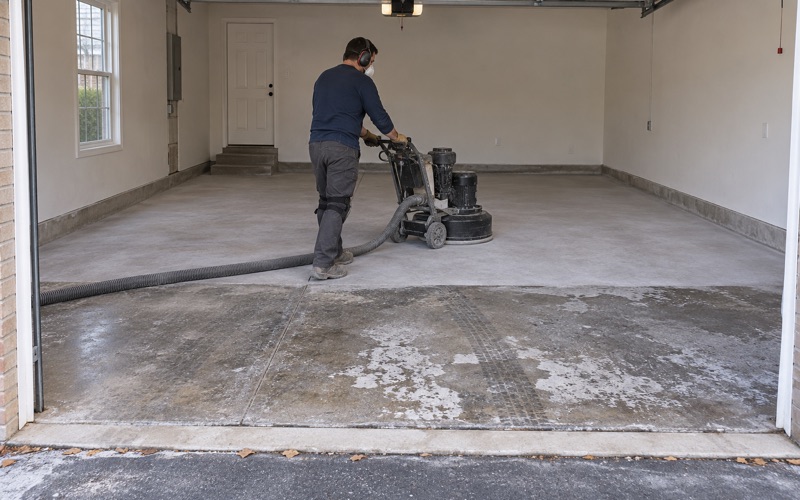
That idea shapes how we approach industrial work here. We open every slab with a diamond grinder or a shot blaster rather than an acid etch, we map cracks, spalls and old coatings before we quote, and we tell an owner plainly when a slab needs repair before it should be coated at all. The coating is only as good as the concrete it is bonded to.
Every proposal we write names the product line, the number of coats and the finished thickness, so a plant engineer can hold the installed floor up against the quote. Below, we walk through one kind of floor that matters in this village: a production floor where plastic resin arrives as pellets, and where the floor’s main job is to let those pellets be swept up.
A Food-Packaging Plant on Rose Street That Runs on Resin Pellets
Franklin Park is a village in Cook County, inside Leyden Township, named for the real estate broker Lesser Franklin, who bought acres here when the area was mostly farm fields. On Rose Street, Pactiv Evergreen, now part of Novolex, has posted jobs supporting the APET extrusion and thermoforming processes at its Franklin Park plant. APET is a clear plastic widely used for food packaging.
Around the Clock, Fed by Pellets
The postings describe a 24/7 APET and polymers food-packaging operation, and extrusion lines of that kind run on resin pellets. Commtrex lists Pactiv as a transload facility in Franklin Park, though that listing names no railroad and no commodity. Put together, the picture is a plant where bulk resin comes in, gets conveyed to the extruders, and never fully stops moving.
A floor in a round-the-clock plant never gets a quiet week. That changes what a coating has to survive and how it gets installed, because a plant that never shuts down does not hand a contractor its whole floor at once. We come back to scheduling in the last section.
What We Know and What We Have Not Seen
We want to be exact about the source of this picture. It comes from public job postings, a transload directory and a state fire marshal record for a heating oil tank abandoned in place at 2607 Rose Street in 2022. We have not been inside the plant, and we have never worked for it, so nothing on this page describes its actual floor or unloading area.
What the research does tell us is the kind of floor problem a pellet-fed packaging plant shares with every plant like it. That problem is documented by the plastics industry itself, and it is the reason this page exists.
Looking for epoxy-flooring closer to Lindenhurst? See Epoxy-Flooring in Lindenhurst.
Pellets Underfoot and Why Slips Rank First
Operation Clean Sweep is the plastics industry’s own program for preventing the loss of pellets, flakes and powder, published by the plastics and chemistry trade groups. Its program manual puts the floor hazard in one line: slips and falls are the number one cause of plastics industry accidents.
A Pellet on a Smooth Floor Rolls
A resin pellet is small, hard and round, and on a smooth floor it behaves like a ball bearing under a boot or a cart wheel. A handful scattered near an unloading point or an extruder hopper is enough to put someone on the ground. Regrind flakes and powder bring their own version of the problem.
That is the tension at the heart of a plastics plant floor. A glossy, seamless coating is the easiest surface to sweep, and it is also the surface where a stray pellet is most dangerous. The answer is not one finish everywhere but a floor zoned by what happens on each part of it.
Guidance, Not a Coating Mandate
Operation Clean Sweep is voluntary. The manual states that none of its guidelines are a mandate, and it names no floor coating, no product and no system. When we cite it, we cite it as the industry’s own description of what a pellet-handling floor has to do, not as a rule that requires epoxy or any other material.
That distinction matters in a proposal. A plant may adopt the program’s practices as house policy, and a floor that supports those practices is worth paying for, but the decision to coat belongs to the owner and the plant’s safety team rather than to a trade program.
Reading the Slab Before We Price It
On any production slab, we start by mapping what is already there: cracks, spalled joints, patched areas and any old coating that is peeling or worn through. Each of those is a place where pellets collect, so the repair list and the pellet-control list turn out to be the same list.
A moisture test is part of the written scope before the price is final. We use ASTM F2170 in-situ relative humidity probes or ASTM F1869 calcium chloride testing, depending on the slab and the product, because a coating pushed off by vapor from below tends to lift at its edges, and those edges are where pellets wedge in.
Catch Pans, Dry Cleanup and Joints Sealed Flush
The Operation Clean Sweep manual is practical about housekeeping. It recommends dry cleanup methods whenever possible, catch trays at all car and truck unloading valves, and unloading areas kept swept up or vacuumed. Every one of those recommendations assumes a floor that cooperates.
Dry Cleanup Needs a Closed Surface
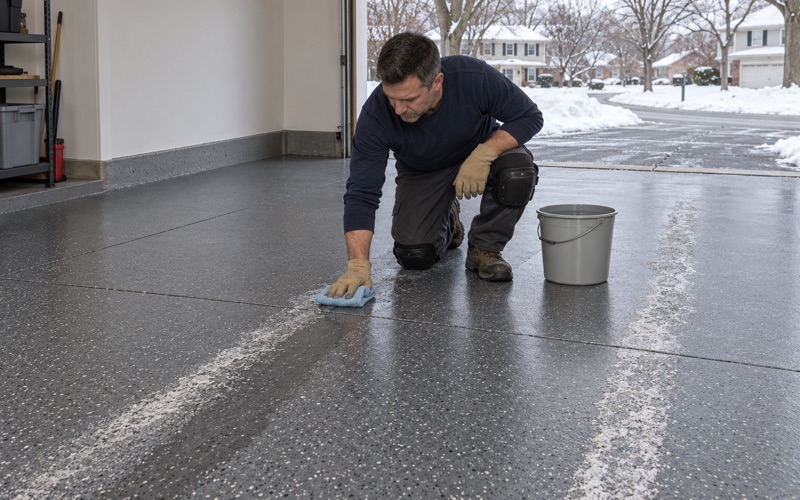
A broom and an industrial vacuum can only recover what sits on top of the floor. Bare concrete that is dusting, pitted or worn open holds pellets and fine powder in its pores and surface voids, and every pass of a broom leaves some behind. A sealed, nonporous coating gives the broom a continuous surface to work against.
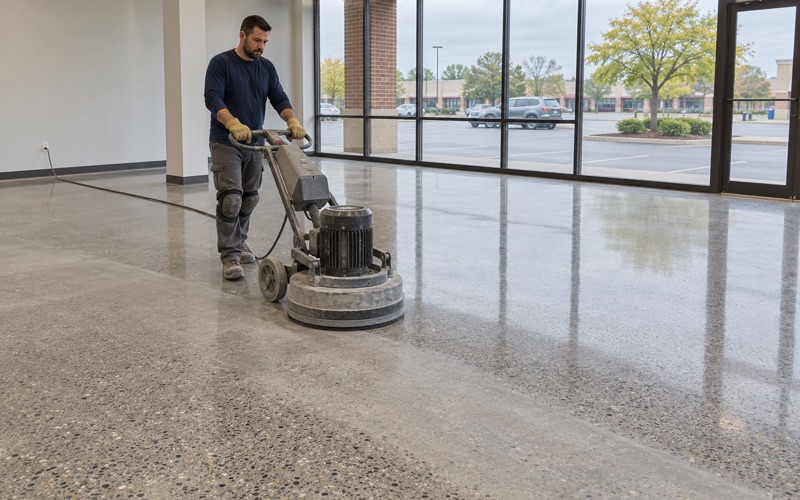
In production areas we usually look at a 100% solids epoxy body coat with a chemical-resistant topcoat, over a slab ground to the ICRI CSP profile the product data calls for. Grinding dust is captured at the machine by a vacuum rather than washed toward a floor drain, which in a pellet plant has the added benefit of not leaving a wet slurry behind.
Catch Pans at the Unloading Valves
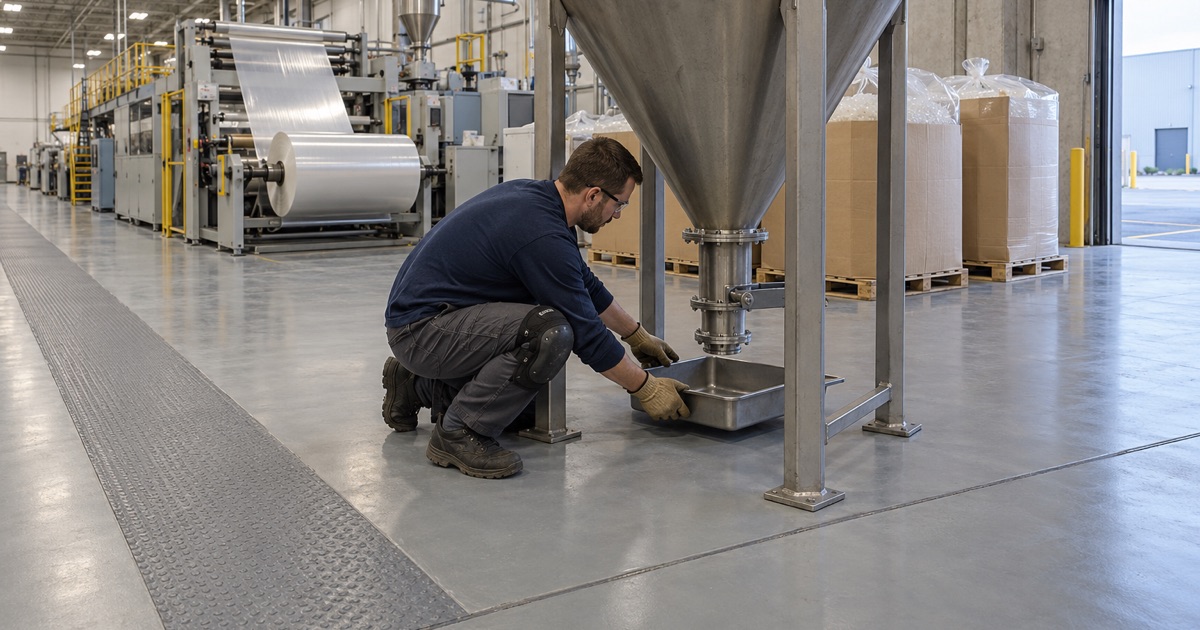
The manual’s guidance on unloading hopper cars is specific: place a catch pan under the unloading valve before opening it, and immediately clean up and properly dispose of any spilled pellets. The pan does the catching, but the floor around it takes whatever misses, and that ring of floor is where spills concentrate.
We treat that area as its own zone in the proposal. It wants a smooth, fully sealed finish that a vacuum wand can clear in one pass, coated edges that meet any curb or dock plate cleanly, and no broadcast texture that would hold flakes and powder in its valleys. Walk paths to and from the valve are handled separately.
Joints Filled So Pellets Have Nowhere to Hide
The manual also recommends sealing expansion joints in concrete floors with a flexible material, so pellets, flakes and powder cannot build up in hard-to-clean spaces. An open saw cut or a spalled control joint is a perfect pellet trap: a broom rides over it, a vacuum misses it, and wheels and boots carry what is lodged there out the door.
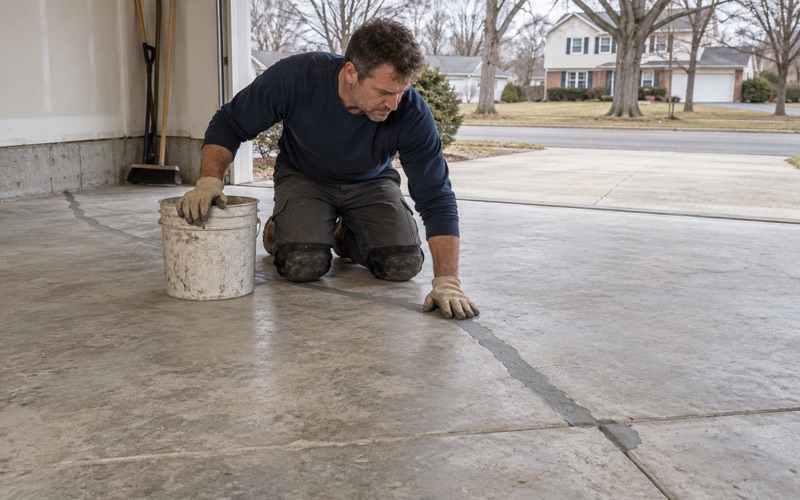
On a coating job, that means repairing spalled joint shoulders first, then filling joints flush with a flexible sealant matched to the joint’s movement, with crack repairs ground level with the surrounding slab. It is one supporting step in a pellet floor, not the whole answer, but skipping it leaves the trap in place under a fresh coat.
Texture in the Walkways, Smooth Where Pellets Are Swept
A pellet plant floor ends up with two finishes that pull in opposite directions. The sweep zones want smooth and sealed; the aisles where people walk all shift want grip. We draw that boundary on a plan before we price anything, because the zoning is the specification.
Slip Resistance Built From the Broadcast
We specify slip resistance by the materials that create it, not by a promise. In walkways, that usually means a quartz aggregate broadcast locked in by a topcoat, with the grit size and the topcoat thickness written into the proposal so the texture can be checked once it is installed.
The tradeoff is real. More grit gives more grip and is harder to sweep clean, so walk lanes usually get a moderate texture that still releases a stray pellet to a push broom, while dedicated pedestrian routes beside machinery can carry more. A plant’s safety team should see samples of each before the coating goes down.
Phasing a Floor in a Plant That Never Stops
We phase plant floors around operating hours, one bay or zone at a time, with overnight and weekend windows when an area cannot close. In a 24/7 plant that may mean coating the unloading zone during a planned shutdown and the aisles in sections, each one barricaded until it has cured enough for foot and cart traffic.
Cure schedules follow slab temperature and the dew point spread at the surface, not the calendar. A loading area with dock doors open to a Franklin Park winter can sit too cold for a coating to cure properly, and amine blush from a cold, damp cure leaves a waxy film that dust and powder cling to.
Village Requirements and the Written Scope
The Village of Franklin Park requires every contractor working inside its limits to hold a village contractor license, post a $10,000 trade-specific license and permit bond, and carry at least $1,000,000 in liability insurance. We confirm the current requirements and any permit question with the Building Department on Belmont Avenue before a job is scheduled.
Our proposal for a pellet floor then lists each zone, the product line and coat count in it, the finished thickness, the joint treatment and the broadcast, plus what the coating warranty leaves out, with moisture first among the exclusions. It is a document a plant engineer can walk the finished floor with, zone by zone.
- 20+ Years in Business
- Moisture Test in Every Scope
- Diamond-Ground, Never Acid-Etched