Buffalo Grove Epoxy Flooring has spent more than 20 years on epoxy flooring in La Grange and across the region, and this page is about one job a floor does that rarely makes a sales sheet: letting a person clean it completely. When a spot needs to be gone rather than merely wiped, the surface underneath decides whether that happens.
A smooth, sealed, seamless coating gives a scrub brush and a rinse nothing to lose things in. Bare concrete is different: it is porous, it cracks, and its joints and pits hold fine debris below the reach of bristles. That difference matters most where animals spend time, which is why we treat cleanability as part of the floor specification rather than an afterthought.
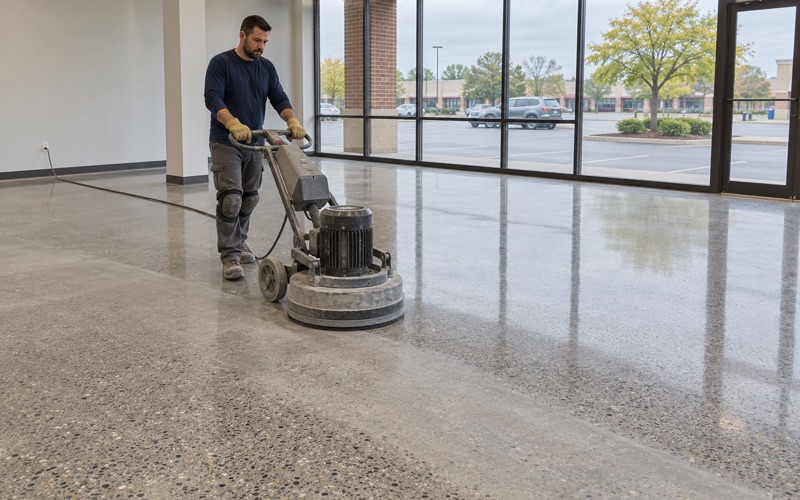
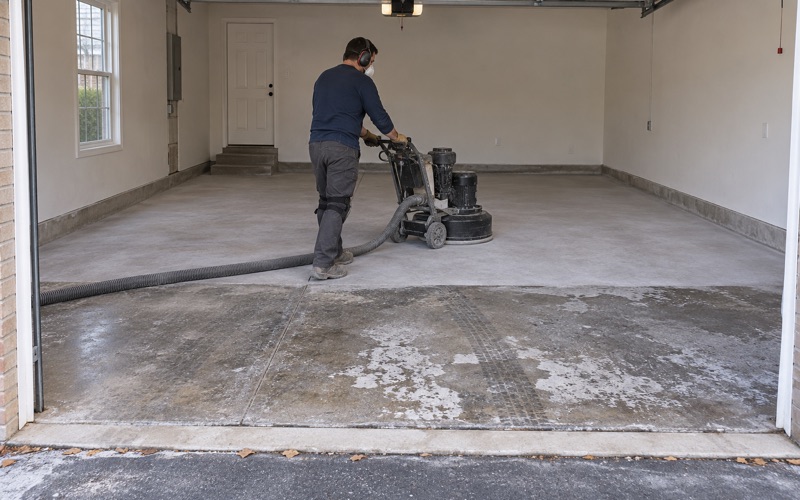
Every slab we coat is opened with a diamond grinder or a shot blaster, never acid, and mapped for cracks and spalls before a price is final. The proposal names the product line, the coat count and the finished thickness. What follows covers why that matters for a retail sales floor and for the garage where a new puppy sleeps.
A Saturday Shot Clinic on a La Grange Road Sales Floor
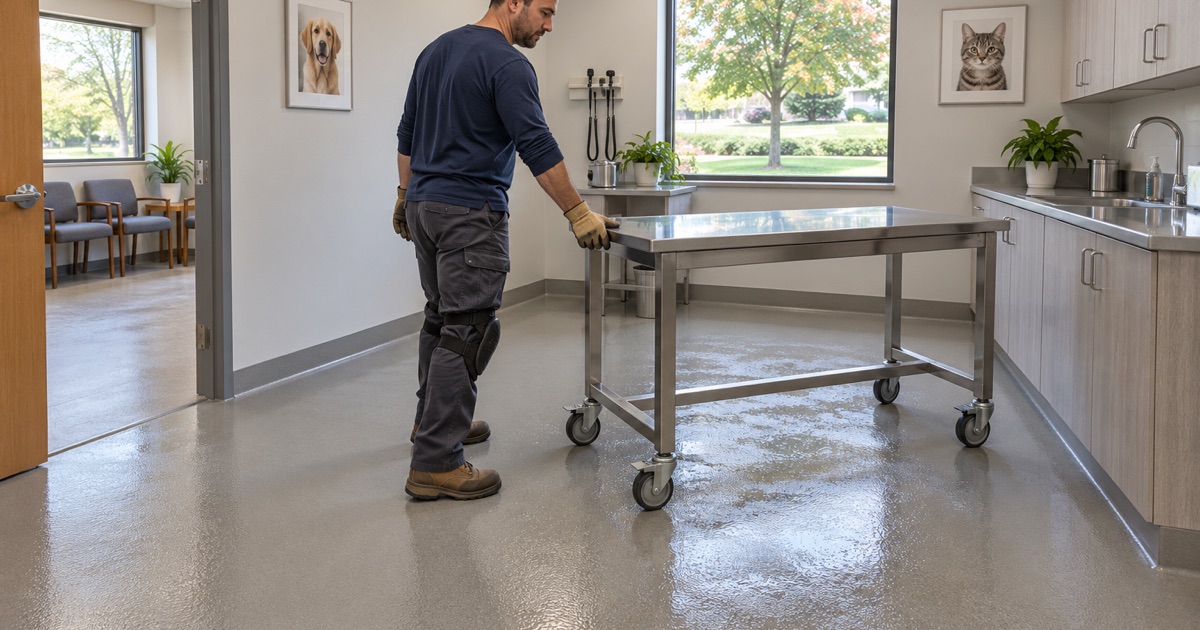
Every other Saturday evening this fall, VIP Petcare sets up a vaccination clinic inside Pet Supplies Plus at 15 North La Grange Road. The scheduled sessions run from 5:00 to 6:30 p.m. on October 17 and 31, November 14 and 28, and December 12, 2026, with walk-ins welcome. Neither the clinic nor the store is a customer of ours.
What the Clinic Does on a Retail Floor
Besides vaccines, the clinic lists intestinal parasite screening, deworming and tapeworm treatment, all handled in a 90-minute window on a sales floor that shoppers walk the next morning. It is preventive care only, no emergencies. That is a sensible use of retail space, and it also puts dogs, some of them nervous, on a retail floor at the end of a shopping day.
We have not read the store’s floor finish or its cleanup routine, and we know of no incident there. What we can reason through is the general case: a clinic that deworms dogs for an hour and a half will now and then get a dog’s stool on the floor, and someone has to clean it before opening.
Roundworm Eggs and Full-Strength Bleach
The reflex is to reach for bleach. A 2017 study in the Journal of Parasitology exposed dog roundworm eggs to full-strength commercial bleach, 5.25 percent sodium hypochlorite, for 15 minutes up to two hours, and eggs in every group still developed motile larvae. Larvae appeared even in eggs left in bleach continuously for 18 days.
The authors concluded that bleach may not be an appropriate disinfectant for dog kennels and cages. That was a laboratory measure of larval movement, not of anyone getting sick, so it is no cause for alarm about shopping. It does change the cleanup plan, because a disinfectant wipe alone leaves the eggs where they were.
Why the Floor Is Part of the Answer
If chemistry cannot be relied on, removal has to do the work, and removal depends on the surface. A floor either lets a brush and rinse water reach everything on it or it does not. That single question is what separates a coating that helps a pet-heavy space from one that only looks clean.
Looking for epoxy-flooring closer to Hinsdale? See Epoxy-Flooring in Hinsdale.
Physical Removal: Pick Up, Scrub, Rinse
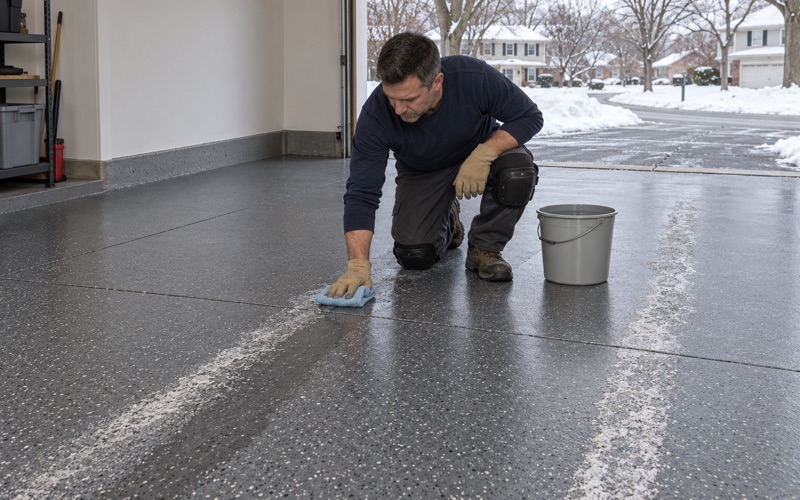
The cleanup that works against roundworm eggs is mechanical, and it runs in three steps. Pick up the solid matter, scrub the spot with detergent and a stiff brush, then rinse so the loosened eggs leave with the water. Each step assumes the floor will give up what is on it.
A Seamless Film With Nothing to Hide In
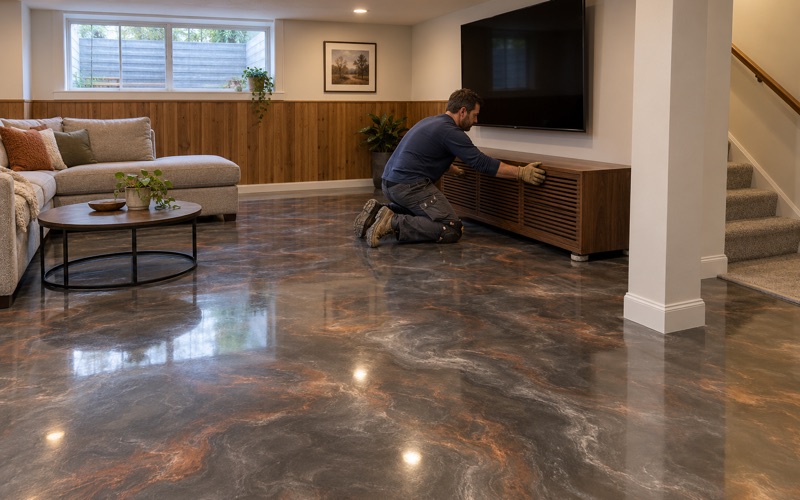
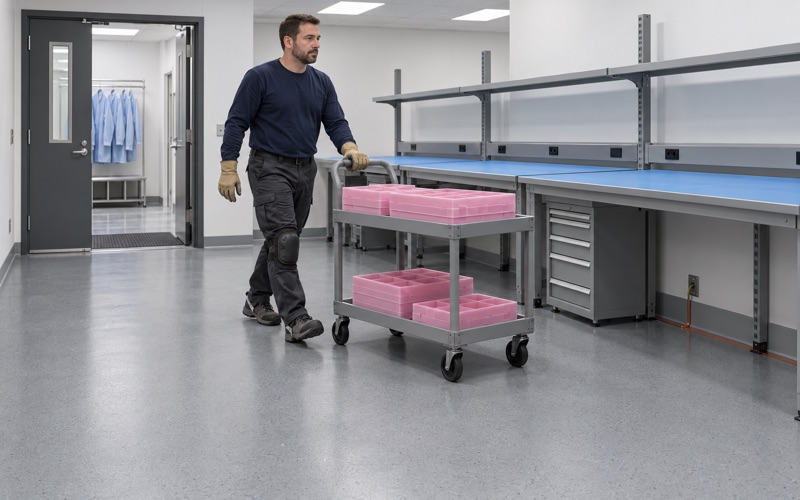
A properly built resin floor is continuous from wall to wall. There are no tile joints, no open pores and no hairline cracks for a microscopic egg to settle into, so the brush contacts the whole surface and the rinse carries everything toward the mop or squeegee. The coating does not kill anything; it simply leaves nowhere to hide.
To build that, we grind the slab to an ICRI concrete surface profile the primer can grip, fill cracks and pits, and apply 100% solids epoxy or a polyaspartic topcoat at the thickness written in the proposal. A floor that matches the quote is one that can be checked, and a thin spot is where wear opens the surface first.
Texture Without Traps
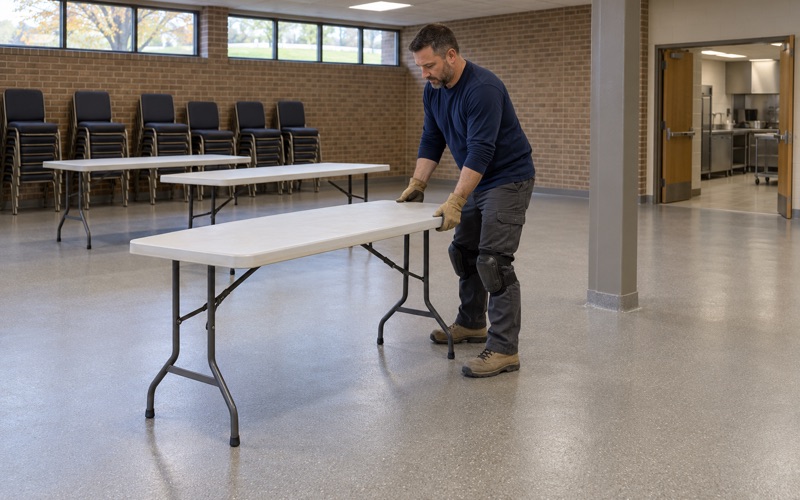
Grip and cleanability pull in opposite directions. A heavy broadcast of quartz aggregate leaves peaks and valleys a brush rides over, so on a floor meant to be scrubbed we specify a fine texture locked under a full topcoat. The slip resistance comes from the named broadcast and topcoat, written into the scope, not from a promise.
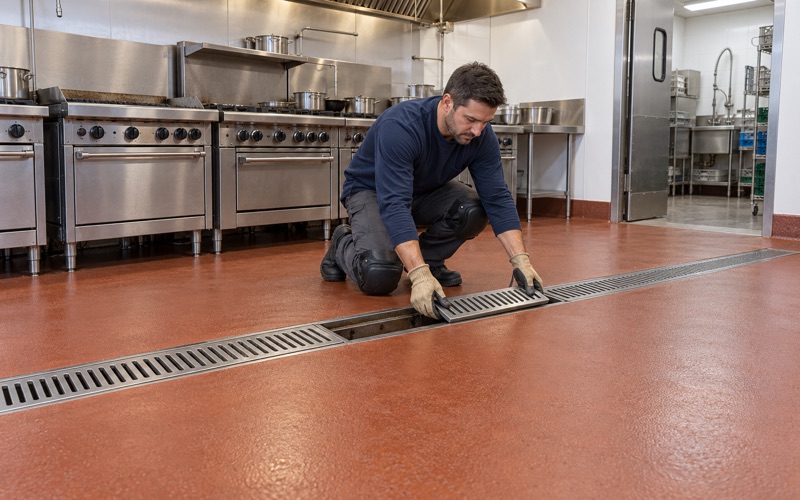
Rinse water also needs somewhere to go. On a retail floor with no drain, that means a wet vacuum or a squeegee and mop bucket, and a surface without pits lets the last of the water lift off in one pass rather than sitting in low spots.
What the Coating Will Not Do
No floor makes cleanup optional, and no coating is a parasite treatment. Screening and deworming belong to a veterinarian, and we offer no veterinary advice. What a sealed floor changes is how completely the scrub and rinse work, which is the part of the job a floor can actually influence.
A coating also wears. Shopping carts, pallet jacks and grit slowly thin a topcoat, so a busy floor is inspected and recoated before wear reaches the base coat and the concrete starts showing through again.
Why Porous Concrete and Grout Lines Hold What a Brush Misses
Bare and worn concrete behaves very differently under a scrub brush. Its surface is a network of small voids, and age adds pop-outs, shrinkage cracks and open saw cuts. Each of those is a pocket below the tips of the bristles, and anything washed into one tends to stay there.
Pores, Cracks and Pits
Rinse water does not only carry debris away; on porous concrete it also carries some of it down. A dog’s stool scrubbed on an unsealed slab can push eggs into the surface pores and along a crack, where the next scrub cannot follow. The spot looks clean while the contamination has only moved a fraction of an inch.
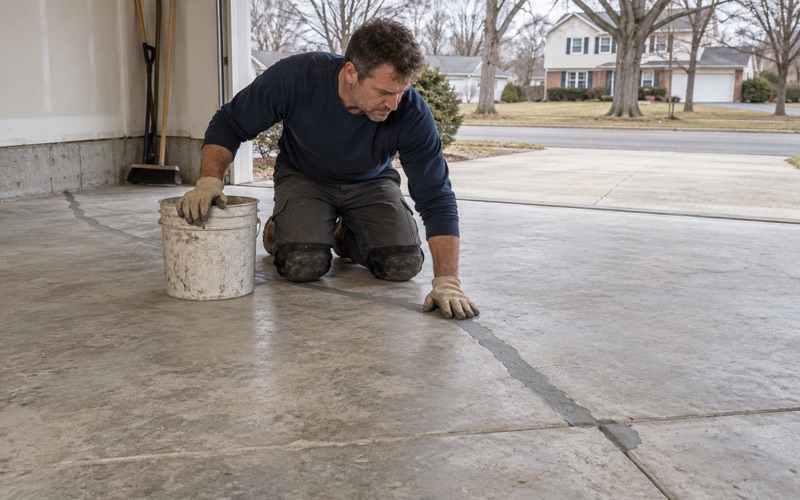
That is why crack mapping comes before any price. We walk the slab, mark cracks, spalls and failed old coatings, and say plainly when a section needs repair or replacement before a coating will seal it. Filling and grinding those defects flush is most of what turns a porous slab into a cleanable floor.
Grout Lines on Tile
Tile has the same weakness in a tidier pattern. The glazed face cleans well, but every grout line is a shallow, porous channel, and a brush skips across the tile edges rather than reaching the bottom. Older cementitious grout also erodes and cracks, opening more space for fine debris to collect.
When a tiled floor is being replaced anyway, taking it down to concrete and coating the slab removes the grout lines entirely. We plan for the slab under the tile before quoting, because old adhesive, cracks and low spots there all have to be dealt with once it is exposed.
Bond Is What Keeps It Sealed
A coating seals a slab only while it stays bonded. Acid etching leaves a shallow, uneven profile and residue that can undercut adhesion, and a film that lifts at its edges reopens the gaps it was meant to close, with a new hollow under it. That is the reason our surface prep is mechanical and never chemical.
Grinding open a slab makes fine concrete dust, and on a retail or home floor that dust should not end up in a drain. We capture it at the grinder with a vacuum rather than rinsing it toward a floor drain, a sump or a storm inlet, and the surface is vacuumed again before primer goes down so nothing is sealed into the film.
Puppies at Home: The Garage and Basement Floor
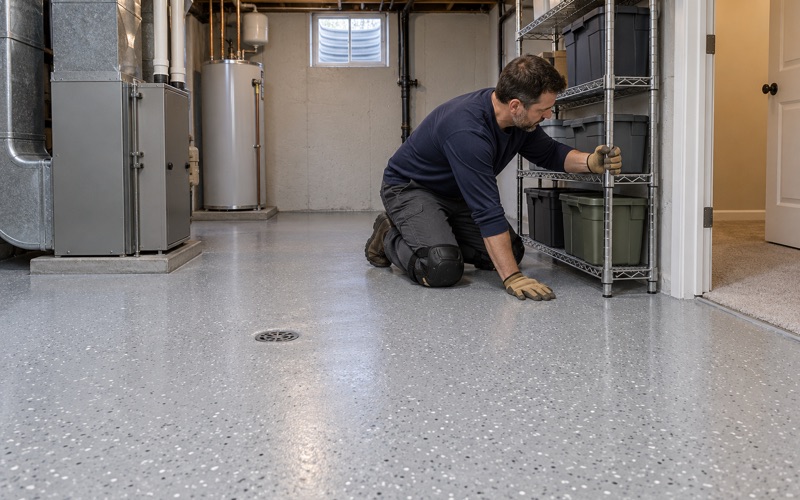
The same reasoning follows a new dog home. A lot of households keep a puppy in the garage or an unfinished basement during housebreaking, and those are usually the roughest slabs in the house. In La Grange, where 81.5 percent of occupied homes are owner-occupied, that floor decision usually belongs to the family living above it.
Older Slabs Get a Moisture Test First
More than a third of the village’s housing, 2,237 units, was built in 1939 or earlier, and nearly two-thirds predates 1960. Those slabs went down long before ASTM E1745 defined a modern under-slab vapor retarder, so we never assume a basement or garage floor is dry.
A moisture test, whether ASTM F2170 relative humidity probes or an F1869 calcium chloride test, is part of the written scope before the price is final. Moisture is also the first warranty exclusion we name, because vapor pushing up from below lifts a coating no matter how well it was applied, and a lifted film is a new place for dirt to collect.
Garage Floors That Also Take Winter
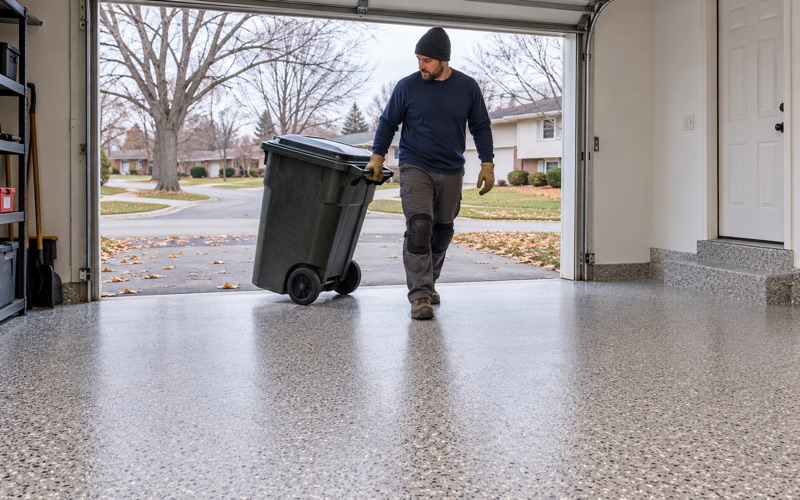
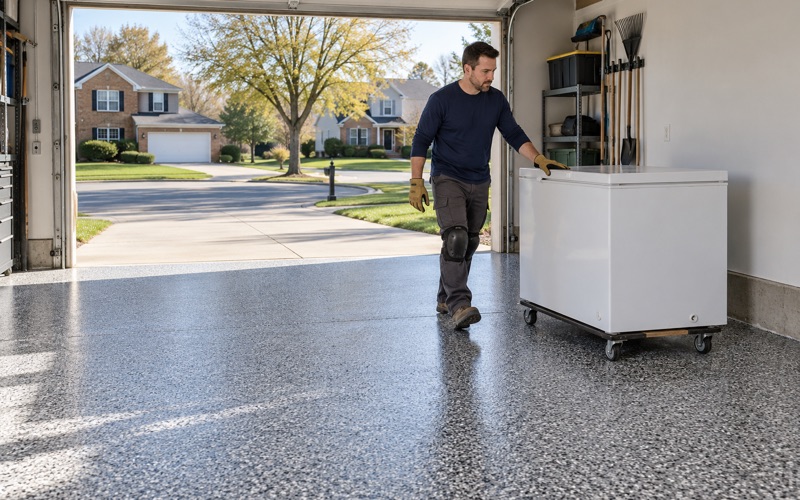
A puppy’s garage is also where the car parks in January. Tires carry brine and rock salt onto the slab all winter, and calcium chloride left to sit attacks bare concrete and dulls weak coatings. We pick garage systems that hold up to that, usually a 100% solids epoxy base with vinyl flake and a polyaspartic topcoat.
Hot tire pickup is the other garage failure, where a warm tire lifts a poorly bonded coating off the slab. Both problems trace back to preparation and product choice, and both leave the kind of broken surface that makes a puppy area hard to scrub and rinse clean.
Timing, Contracts and the Village
Cure schedules follow slab temperature and the dew point spread at the surface, not the calendar, so an unheated garage in deep winter is told to wait. Plan the puppy’s space around that. Home jobs over the state threshold get a written contract and the Illinois Home Repair: Know Your Consumer Rights pamphlet before any grinding starts.
The Village of La Grange’s permit page lists replacing existing flooring among work that needs no permit, but finishing a basement room or altering a garage does require one, and the page does not mention floor coatings. We confirm the path with Community Development before scheduling rather than guessing.
- 20+ Years in Business
- Moisture Test in Every Scope
- Diamond-Ground, Never Acid-Etched