Buffalo Grove Epoxy Flooring brings more than 20 years of resin work to epoxy flooring in Lake Forest, and most of the jobs we take on start with one question: how does this room actually get cleaned? A floor that looks finished but holds dirt in its seams is not finished. We build resin floors that leave nothing for grime, moisture or pests to settle into.
That matters most where animals live. Pet owners know the cycle: a dog comes in from the yard, a cat sleeps on the basement rug, and a few weeks later the household is treating fleas again. A coating does not kill fleas or keep them away. What it does is take away the soft, protected places where their young develop, so ordinary cleaning finally reaches them.
This page explains that idea in practical terms: where flea larvae grow indoors, why a seamless floor with an integral cove changes the cleaning, and how we prepare a basement, mudroom or garage slab so the coating stays bonded. Every proposal we write names the product line, the coat count and the finished thickness, so you can check the floor against the quote.
A Small-Animal Clinic on North Western Avenue Since 1989
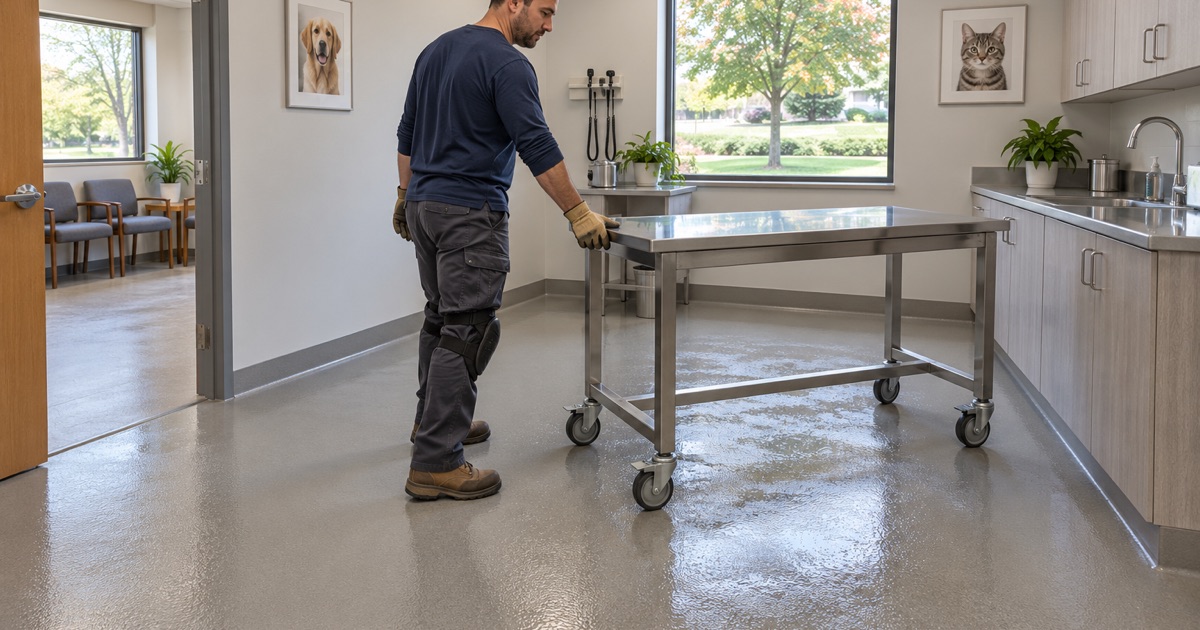
Lake Forest Animal Clinic has treated small animals at 1391 North Western Avenue since 1989. We have not worked there and have not seen its floors, and it is not a customer. We mention it because a practice like that, with animal patients coming through the door all week, shows on a larger scale a problem every pet household shares.
Fleas Ride In on Patients
Any small-animal practice sees fleas come in on the animals it treats. That is not a comment on any clinic’s housekeeping; it is simply how fleas travel, on the host. Eggs that fall off a pet in an exam room or a waiting area start a cycle that plays out on the floor rather than on the animal.
A home works the same way. The dog that spent the afternoon in a wooded yard carries the same risk into a family room, and the floor it rests on decides how easy the next stage is to interrupt. That is why we treat the floor as part of the answer, alongside whatever treatment your veterinarian recommends for the animal.
What a Clinic-Style Floor Asks For
In any room where animals are examined, the floor is mopped or vacuumed far more often than a living room is. The useful question is not how the floor looks on day one but whether the daily cleaning reaches every square inch, including the edge where floor meets wall and the shadowed strip under the cabinets.
Lake Forest has a wide spread of buildings that question applies to. Census figures put 18.0 percent of the city’s housing in 1939 or earlier and 18.6 percent in 2000 or later, so the slab under a pet’s bed may be very old or quite new. Both can carry the same seamless system once the concrete is properly prepared.
Permits and Paperwork in Lake Forest
Building permits in Lake Forest run through the City’s Community Development Department, and whether a given floor project needs one is a question to settle with that office before a date is set. Illinois licenses no general, flooring or coatings contractor, so a license number is not something we can honestly offer, and we will not pretend otherwise.
Home jobs over the state threshold get a written contract and a copy of the Illinois Home Repair: Know Your Consumer Rights pamphlet before any grinding begins, as the Home Repair and Remodeling Act requires. The contract spells out the moisture test, the repairs we found and what the warranty does not cover, with moisture named first.
Looking for epoxy-flooring closer to Barrington? See Epoxy-Flooring Services in Barrington.
Where Flea Larvae Grow and Why Sprays Miss Them
University of California pest management guidance on fleas is unusually specific about where the immature stages live, and it reads almost like a flooring brief. The points below come from that guidance, not from any Lake Forest property.
Two to Five Days to Hatch
Flea eggs hatch in about two to five days, according to the UC Integrated Pest Management Pest Notes on fleas. The larvae that emerge do not live on the pet. They crawl and feed for 8 to 15 days before spinning small silken cocoons, and all of that happens at floor level, out of sight.
That timing is the reason one cleaning rarely ends a problem. Eggs laid today become larvae within the week, and larvae that find a good hiding place are protected long enough to move into the next, tougher stage. Breaking the cycle means reaching the larvae where they are.
Carpet Pile, Crevices and Gaps Under Cabinets
The same guidance says larval development is restricted to protected places with at least 75% relative humidity. In practice that means the base of carpet fibers, cracks and crevices, and the gaps around baseboards and under cabinets. Larvae are unlikely in high-traffic areas. The quiet edges of a room are the habitat.
Look at most floors with that in mind and the habitat is obvious. Wall-to-wall carpet is one continuous fiber base. A vinyl or tile floor that has lifted at the wall, an open seam, a cracked old slab, and the dark strip under a toe-kick all offer the shelter and humidity larvae need.
Why Pupae Outlast the Spray
Sprays fail in two ways the UC notes describe plainly. The material can miss larvae at the base of carpet fibers where they develop, and the spray does not kill pupae at all. Fleas keep emerging for about two weeks after a treatment, and at cool temperatures fully formed fleas can wait in their cocoons for up to 12 months.
We are not pest-control contractors and give no advice on treatment. Our point is narrower: a floor that offers no fiber base and no crevice leaves the next generation fewer places to hide, and makes the cleaning that the same guidance recommends far easier to do every day.
A Floor With No Pile and No Crevice
A seamless resin floor answers the habitat problem directly. There is no carpet pile, no grout line, no sheet seam, and when it is detailed properly, no gap at the wall either. Daily vacuuming or damp-mopping then reaches every place a larva could otherwise settle.
An Integral Cove Up the Wall and Under the Casework
The detail that closes the last crevice is an integral cove: the floor material is troweled up the wall in a rounded radius, typically a few inches high, so floor and wall become one continuous surface. Run under the casework and around the toe-kicks, the cove removes the right-angle joint where debris, moisture and flea eggs collect.
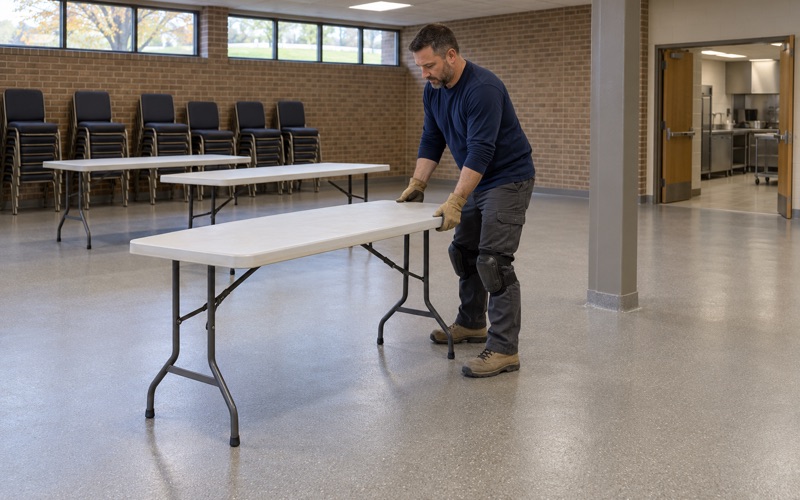
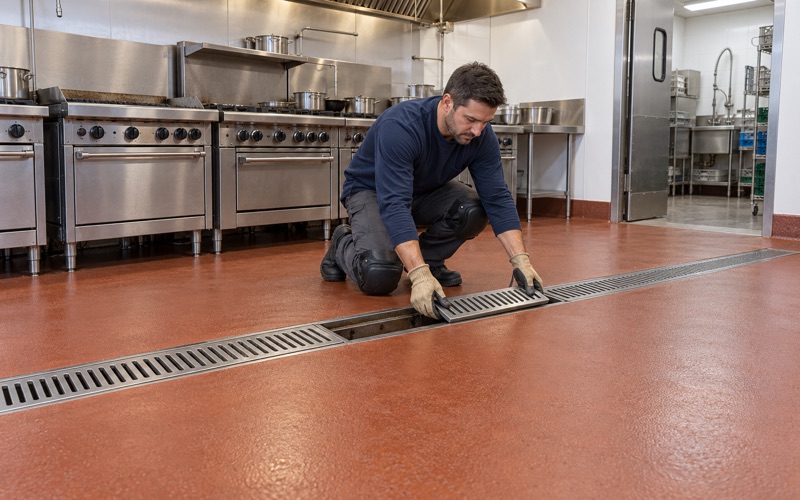
This is the same logic the FDA Food Code applies to kitchens, where section 6-201.13 calls for coved floor and wall junctures so the joint can be cleaned. A clinic exam room, a grooming area or a home laundry room where the cat litter box lives benefits for the same reason. We build the cove from an epoxy cove mortar and top it with the floor system.
Preparing the Slab So the Floor Stays Bonded
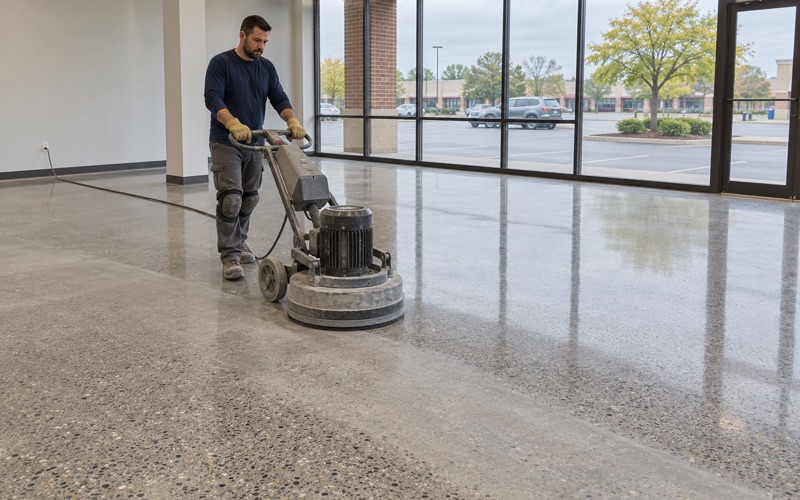
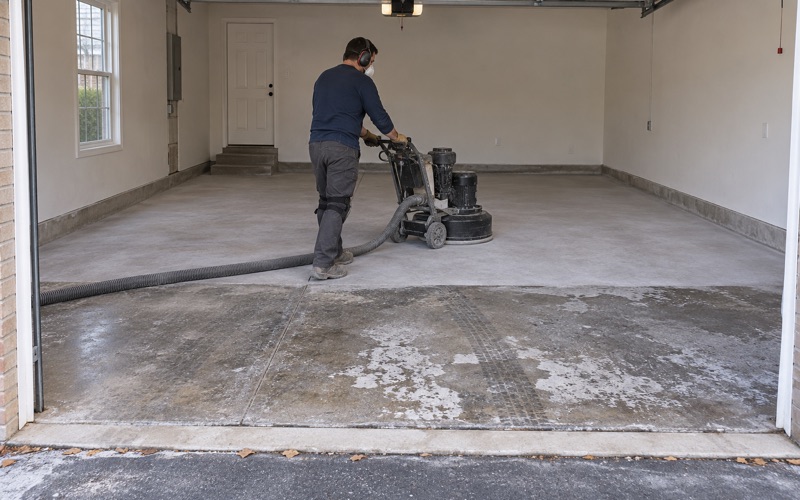
A seamless floor only stays seamless if it stays bonded. We open every slab with a diamond grinder or a shot blaster, never an acid etch, to give the resin a real ICRI concrete surface profile to grip, and we capture the grinding dust at the machine with a vacuum instead of rinsing it toward a drain.
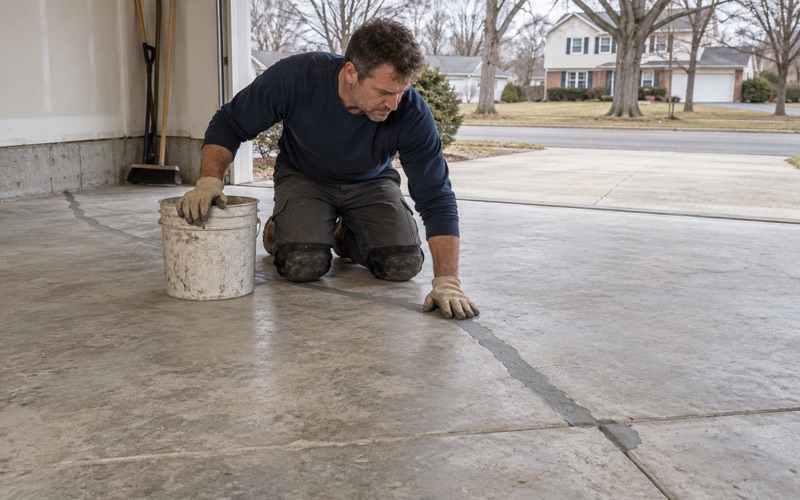
Cracks, spalls and old coatings get mapped before we price anything, and we will tell you when a slab needs repair or replacement first. A moisture test, such as ASTM F2170 in-situ relative humidity probes or ASTM F1869 calcium chloride testing, is written into the scope before the price is final, because vapor pushing up from below is a common reason coatings lift.
Cleaning That Reaches Everything
On a finished floor, the UC advice to vacuum floors and crevices around baseboards and cabinets daily becomes a short job. A vacuum head or a damp mop runs up the cove and into the toe-kick space, and there is no carpet base for the head to miss. A smooth, sealed topcoat also dries quickly after mopping, so damp does not linger where a larva would want it.
None of this keeps fleas out, and we will never sell a coating that way. It changes the odds by removing habitat, which is the part of the problem a floor contractor can honestly affect. Your veterinarian handles the animal; the floor just stops helping the fleas.
Pets at Home: Basements, Mudrooms and Garages
Most of this argument lands in houses rather than clinics. Wherever a dog or cat lives, it has a favorite floor, and that floor is often below grade, by the back door or in the garage.
The Basement Where the Dog Sleeps
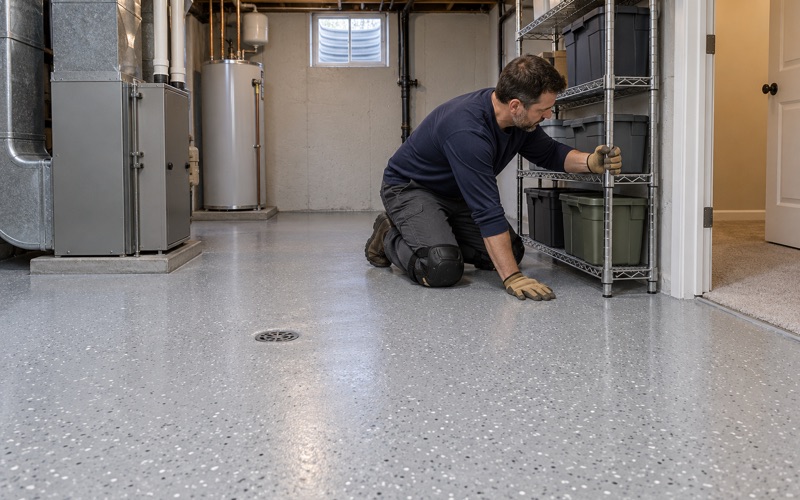
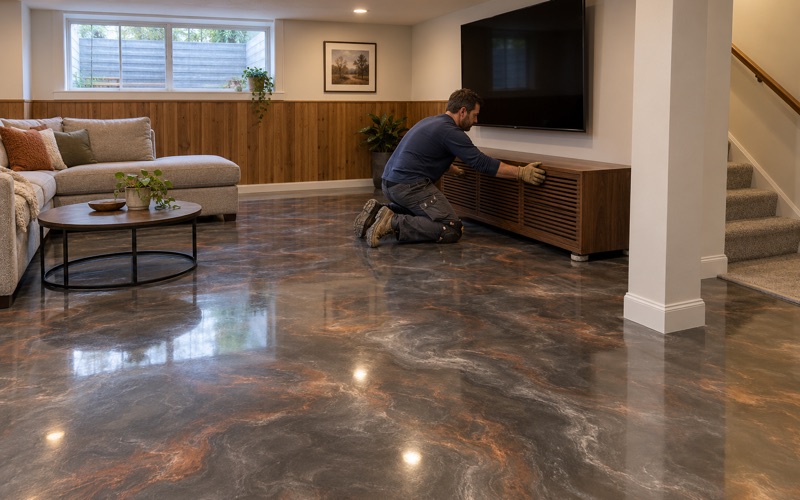
A carpeted basement is close to ideal flea habitat: fiber pile, little foot traffic and humidity that tends to run higher below grade. Replacing that carpet with a coated slab and a cove at the walls turns the dog’s room into one that a weekly, or daily, mop actually covers. A washable dog bed then becomes the only soft surface left to launder.
Basements are also where moisture decides whether a coating lasts, so we read the floor for past water before anything else. A coating does not stop seepage, hydrostatic pressure or a sump that cannot keep up, and we name moisture as the first warranty exclusion before the job is sold rather than after a blister appears.
Mudrooms and Back Halls
The mudroom is often where a dog comes in from the yard, so it is the first floor to collect whatever rode in on its coat. Tile with crumbling grout or a vinyl floor with open seams gives eggs a ready place to settle, right next to the door. A seamless floor with a cove under the bench and the cabinets leaves no such shelter.
Mudrooms also take wet boots, salt and sand all winter, which is a second reason to choose a hard-wearing system. We often specify a 100% solids epoxy base with a polyaspartic or polyurea topcoat here, a pairing that takes daily mopping well.
Garage Slabs, Salt and Winter Timing
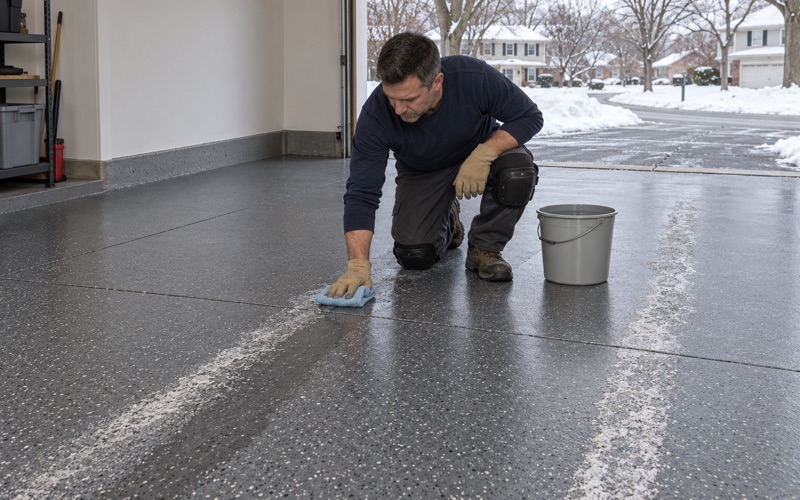
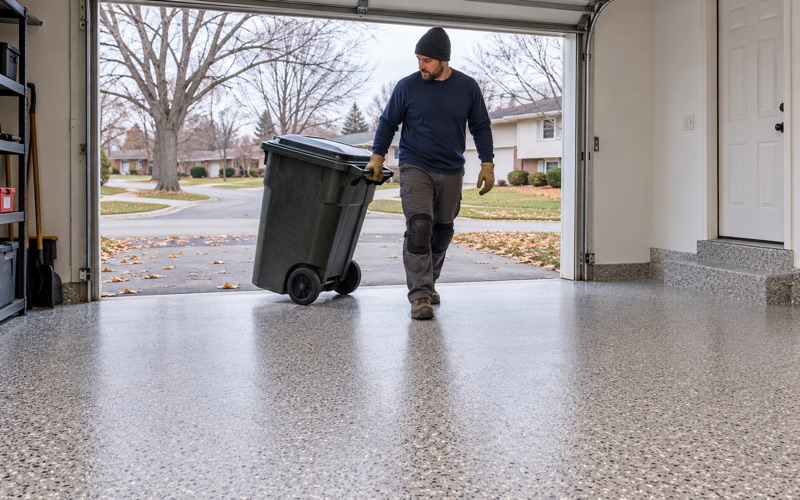
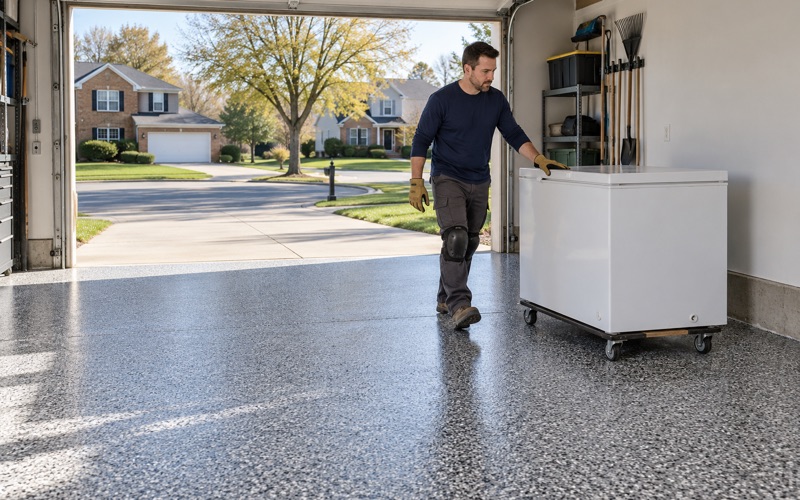
Some households give the dogs the garage, especially a heated one with a door to the yard. A cracked garage slab offers the same crevices as a basement, plus brine and rock salt from the tires all winter, so we choose garage systems to hold up to calcium chloride deicers and to resist hot tire pickup.
Timing matters as much as product. We schedule cure by slab temperature and dew point spread at the surface, not by the calendar, and an unheated garage in deep winter is told to wait for warmer weather. If you live in a townhome or condominium, we also work around association rules and shared driveways before setting a date.
- 20+ Years in Business
- Moisture Test in Every Scope
- Diamond-Ground, Never Acid-Etched