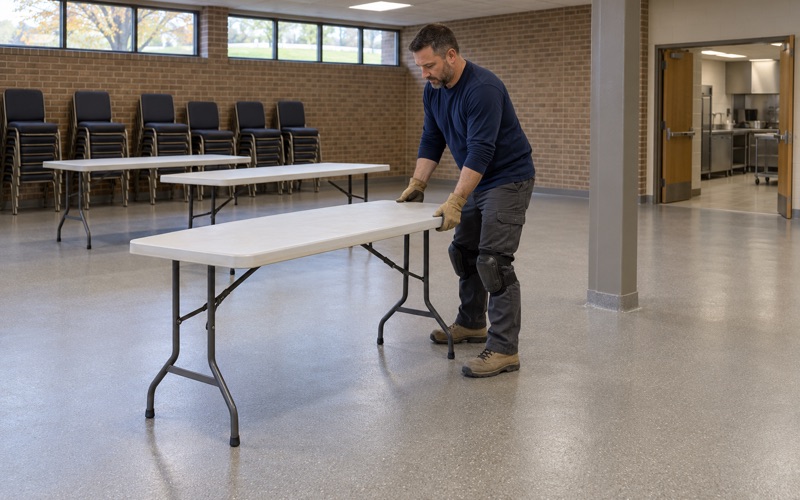
Buffalo Grove Epoxy Flooring has spent more than 20 years on epoxy flooring in Prospect Heights and the neighboring north suburbs, and some of the floors we think hardest about are the ones that host people rather than cars. A room that holds a wedding reception, a graduation party or a holiday gathering has to look sharp under the lights and stay safe underfoot for hours, sometimes with a fog or haze effect running in the corner.
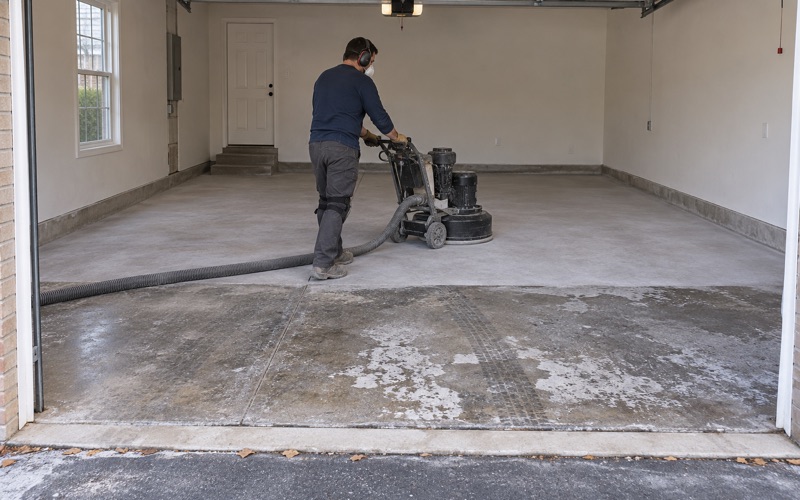
Our starting point does not change from job to job. Every slab is opened mechanically with a diamond grinder or a shot blaster, never an acid wash, so the coating bonds to a real profile instead of a smooth trowel skin. A moisture test is written into the scope before the price is final, and the proposal lists the product line, the number of coats and the finished thickness, so an owner can hold the finished floor up against the paper.
What changes for an event space is the top of the system. The texture, the sheen and the cleanup routine are chosen for a floor that may carry a thin, nearly invisible wet film by the end of the night. The sections below explain where that film comes from and what we do about it.
What Condensed Fog Leaves on a Banquet Floor
A golf clubhouse that turns into a banquet hall
Rob Roy Golf Course sits at 505 E. Camp McDonald Road, inside the Prospect Heights city limits in Wheeling Township, and is run by the River Trails Park District as a public nine-hole course with the 10th Hole Bar and Grill. Its clubhouse doubles as an event venue: the park district’s weddings and banquets page says it holds up to 160 guests for a banquet setup and 260 for a meeting setup, with floor-to-ceiling windows over the fairways and a full-service bar.
We have not seen the banquet room’s floor, and we do not know whether the venue allows fog, haze or dry-ice effects. We bring it up because a room like that is the clearest local example of a floor with a different job from a garage. On a single Saturday it can carry a full room of seated guests, catering carts, a bar line and a band’s or DJ’s equipment, all within a few hours.
What the fog machine manuals put in writing
Fog machine makers state the hazard plainly. The safety section of one manufacturer’s vertical fog machine manual warns that condensed fog can make floors and surfaces slippery and tells operators not to aim fog at the floor. It says to check at regular intervals whether the floor can be walked on without a slipping hazard and to remove the condensation if needed.
The same manual notes that fog fluid contains glycols and that hot fluid drops can occasionally escape from the nozzle. Other fog machine manuals from the same retailer carry the same condensation warning, so this is not one brand’s quirk. For a floor owner it means a coating should be judged on how it behaves once a light film of condensate has settled on it, not only on how it looks freshly mopped.
Low-lying dry-ice fog and where it settles
Dry-ice and chilled low fog behave differently from haze that hangs in the air. Theater technicians describe most of the moisture from low-lying fog landing within about six feet of the outlet, which puts a damp patch right where guests are likely to walk, and they treat a quick mop pass after the effect as routine.
That gives a floor plan a practical rule. The zone around an effect outlet is where the floor’s grip matters most, and it is also the zone that should be checked and wiped before guests move through it. Knowing where the machine will sit is part of how we decide where texture matters most.
Looking for epoxy-flooring closer to Deerfield? See Epoxy-Flooring Services in Deerfield.
Why a High-Gloss Coat Hides a Slippery Film
A clear film on a clear finish
A high-gloss epoxy or polyaspartic topcoat already looks wet under event lighting, which is the look many owners ask for. The trouble is that a thin layer of condensed fog on that surface looks almost the same as the clean surface beside it, so neither staff nor guests get a visual cue that one patch is slick and the next is not.
A satin topcoat does not prevent the film, but it makes the film easier to spot. Moisture sitting on a satin finish shows as a darker, shinier patch against the flatter floor around it, and that contrast is the cue a staff member needs to grab a dry mop before someone steps into it. On an event floor we treat sheen as a question of seeing the hazard, not only of looks.
Glycol condensate is wiped up, not left to dry
Because fog fluid contains glycols, condensate on the floor is not simply water that will evaporate on its own while the party goes on. We tell owners to treat it as a residue to remove, with a dry mop during the event and a damp pass followed by a dry one afterward.
Whatever is left behind after one event becomes the starting condition for the next. Cleaning the floor fully after each load-out keeps the topcoat working the way it was specified, and it keeps a slick patch from one night from turning into a surprise at the next morning’s setup.
Rubber feet and the stains they can leave
The same fog machine manual raises a second floor issue that has nothing to do with slipping. It warns that the plasticizer in the machine’s rubber feet may react with the coating of a parquet, linoleum, laminate or PVC floor and, over time, leave permanent dark stains, and it advises felt pads or a piece of carpet underneath.
Speaker stands, lighting stands and amplifier cases often sit on similar rubber feet for hours. A resinous floor is a coating too, so we apply the same caution to it and recommend a felt pad or a mat under any rubber-footed gear that stays in one spot through an event.
Texture, Sheen and the Dry-Mop Step for Event Floors
Grip comes from the broadcast and the topcoat
We do not sell a slip-resistant floor as a slogan. On an event floor the texture is written into the proposal as a specific broadcast, usually a fine quartz aggregate or a vinyl flake layer locked under a polyaspartic or polyurea topcoat, at a rate chosen to give shoes some bite without making the floor hard to mop clean.
The finish is then specified as satin rather than full gloss for the reasons above. Because the proposal names the product line, the coat count and the finished thickness, whoever manages the room can confirm later that the texture they paid for is the texture on the floor, and can ask for the same system when an area is recoated.
Putting the dry mop in the event checklist
A coating cannot carry the whole load; the routine around it matters as much. For any room that runs fog, haze or low-fog effects, we suggest the event checklist include a walk of the floor near each outlet during the event, a dry-mop pass wherever condensate has settled, and a full clean after load-out.
Keeping a dedicated dry mop and a few absorbent pads beside the effect station turns that into a short task instead of a hunt for supplies. It also puts the job on someone who knows the floor, rather than leaving it to whoever happens to notice a shine near the outlet.
Staging gear without marking the floor
Felt pads under rubber-footed equipment are cheap and easy to forget. We recommend a small kit of them kept with the event supplies, along with carpet squares or rubber-free mats for heavier cases and for the fog machines themselves, so the stain warning is handled the same way every time.
The occasional hot fluid drop from a fog nozzle is another reason to set a mat under the machine. The mat catches those drops along with any condensate that pools around the base, and keeps both out of the path guests and servers walk.
Party Rooms and Basements in Prospect Heights Homes
The home version of the same problem
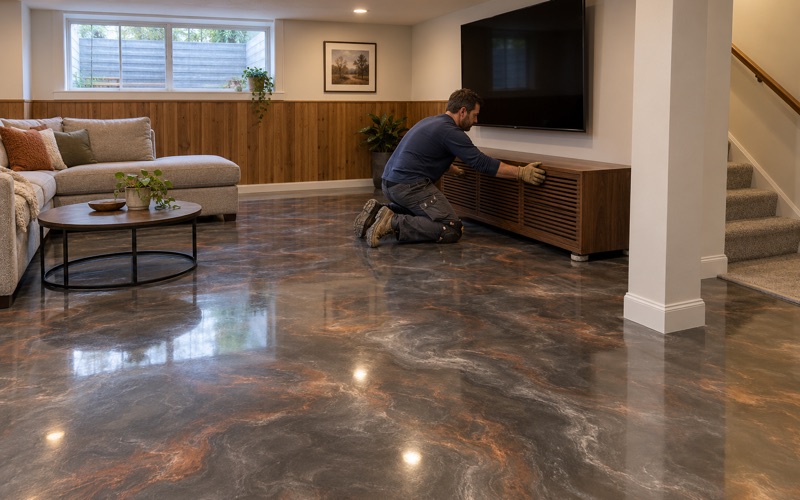
When a homeowner in Prospect Heights plans a basement or lower-level room as the party space for birthdays, graduations and holidays, the event logic carries over at a smaller scale. A rented fog machine, a portable speaker and a folding table of food can turn a family room into a small venue for an evening, with the same condensate and the same rubber feet on the floor.
The answer is the same as in a banquet room: a fine texture, a satin finish, a mat under the machine and a towel or dry mop kept close by. A home party room also collects spills a banquet hall sees less of, such as drinks set on the floor and folding tables dragged into place, and a textured satin floor handles that use better than a high-gloss showpiece.
Reading the basement for water first
Before any basement becomes a party room, we read the slab for past water. Tide marks along the walls, rust around old fittings and a sump that cycles constantly tell us more than the surface does. A coating does not stop seepage or make up for a sump that cannot keep pace, and we say so plainly when the water has to be dealt with first.
The moisture test in every written scope matters most here. Depending on the slab we use an ASTM D4263 plastic sheet test or an ASTM F1869 calcium chloride test, and where the reading calls for it, a moisture-mitigation primer goes under the system. Moisture is also the first exclusion we name when we explain what the coating warranty does not cover, before the job is sold.
Planning around the party date
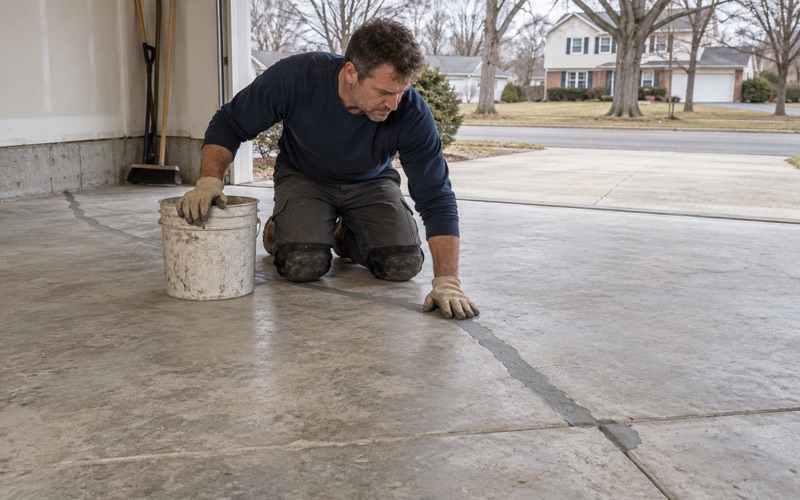
Owners often call with a date already set, such as a June graduation or a December gathering. Cracks, spalls and old coatings are mapped first, and we say so when a slab needs repair or replacement before it should be coated, because that work has to fit inside the same calendar.
Our cure schedules follow slab temperature and the dew point at the slab surface rather than the calendar, so we work backward from the event to leave room for grinding, repairs, each coat and the full cure before furniture and guests arrive. We would rather tell an owner early that the room needs another week than watch a new floor get loaded before it is ready.
- 20+ Years in Business
- Moisture Test in Every Scope
- Diamond-Ground, Never Acid-Etched