Buffalo Grove Epoxy Flooring has spent more than 20 years installing epoxy flooring in Westchester and across the western suburbs, and the floors we think hardest about here are the ones a regulation judges. A garage slab is measured by how it looks after a winter of salt. A floor under a drycleaning machine is measured by whether solvent can get through it, and that is a different standard entirely.
This page is about that second kind of floor: diked containment areas where drycleaning solvent is handled, and the smaller version of the same problem in a home garage where strippers and degreasers sit on a shelf. We explain what the state asks of the floor, why plain concrete falls short, and where a resin coating helps and where it does not.
One point up front, because it shapes everything below. We prepare and coat floors; we do not hold any environmental permit, and we do not sign off on a plant’s compliance. What we can do is build a sealed floor surface to a written specification, with the product line, coat count and finished thickness on the proposal, so the owner and the inspector can check the floor against the paper.
A Drycleaning Plant on Roosevelt Road and the Law Under It
Directory listings show Olympic Westchester Cleaners, at 10225 W Roosevelt Rd, with 58 years in business. The Illinois EPA drycleaner roster for 2026 lists that address under DC 00482, which marks it as a working drycleaning plant rather than only a drop-off counter. We have no relationship with the business and have not seen its floor, its machine or its solvent.
Why One Storefront Anchors This Page
Westchester is mostly houses, and the village has little industrial floor left. Assessed industrial value fell from about $14.2 million to under $4 million between the 2007 and 2016 levies. A drycleaning plant is the closest thing it has to a regulated process floor, and it shows a rule that most property owners never read. The same reasoning applies to any shop where a solvent sits in a tank above bare concrete.
What We Did Not Read
The solvent in that machine was not found in anything we reviewed, so this page does not say which one it is. Drycleaning machines commonly run perchloroethylene or a hydrocarbon solvent, and the two behave differently against floor sealers. That single unknown is why the first question on any drycleaning floor is the chemical, not the color.
What 415 ILCS 5/22.57 Asks of the Floor
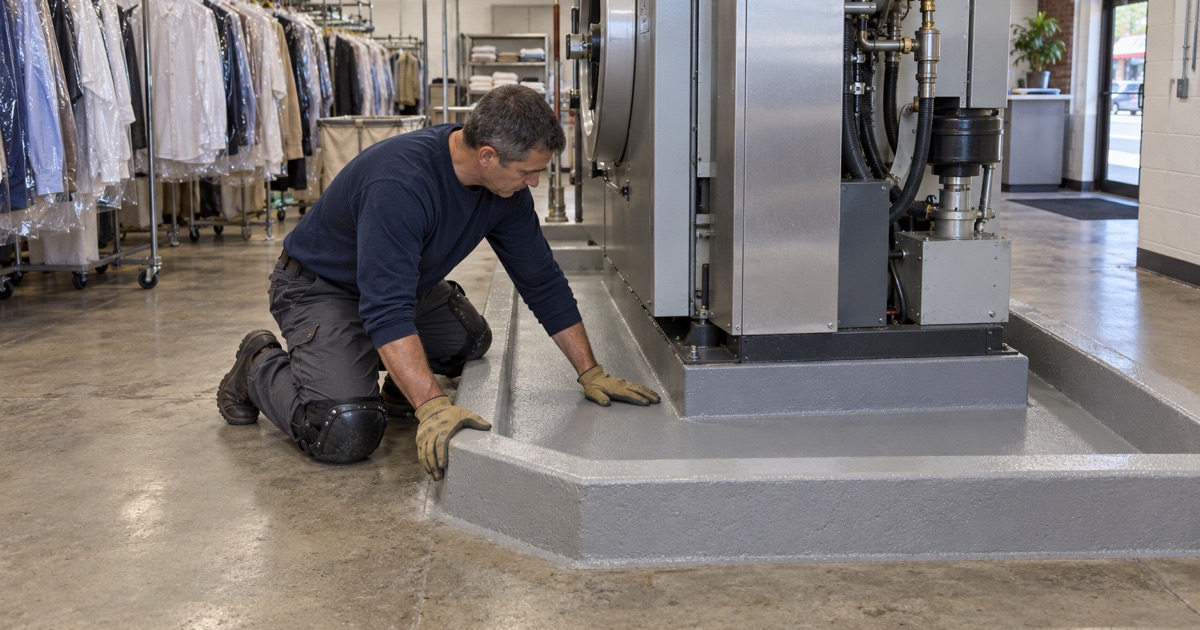
Subsection (c) of the Illinois Environmental Protection Act’s drycleaning section says no one may operate a drycleaning machine without secondary containment in place. Around each machine, a dike or other containment structure must hold 110 percent of the solvent in the largest tank or vessel within it. Other equipment, drycleaning areas and portable waste containers carry their own capacity figures.
The next clause is the one that reaches a floor contractor. Those portions of diked floor surfaces where a drycleaning solvent may leak, spill or otherwise be released must be sealed or otherwise rendered impervious. Capacity comes from the dike’s height and footprint, not from a coating, so a sealed floor is one part of the containment, never a substitute for the structure itself.
Since January 1, 2013, new machines also need primary and secondary control systems, and an older perchloroethylene machine with only a primary control may run out its useful life but cannot be moved to another facility. That matters to floor scheduling: a plant replacing a machine has a window when the diked area is empty, and that is the best time to prepare and seal it.
Looking for epoxy-flooring closer to La Grange Park? See La Grange Park Epoxy-Flooring.
Why Bare Concrete Does Not Count as Impervious
For what impervious means on an actual floor, another state’s program is the clearest guide we have found. Florida’s Department of Environmental Protection, in its 2017 guidance on drycleaning containment, says concrete or asphalt floor surfaces are not impervious to drycleaning solvents. That is Florida’s rule, not Illinois law, but it describes the material honestly.
Pores, Capillaries and a Low-Viscosity Liquid
Even a dense, steel-troweled slab is full of capillary pores and fine shrinkage cracks. Water finds them slowly; a thin cleaning solvent finds them faster, because it wets concrete readily and does not need much pressure to travel. Once solvent is in the slab and the soil beneath it, the cleanup is no longer a floor job.
That is why a densifier or a penetrating sealer alone is the wrong answer here. A lithium silicate densifier hardens the surface and cuts dusting, but it leaves the pore structure open to a liquid that dissolves oils and resins. What we aim for is a continuous film the solvent cannot pass.
Matching the Sealer to the Solvent in the Machine
Resin systems are not equally resistant to every chemical. A coating that shrugs off motor oil can soften, blister or lose adhesion under a chlorinated solvent, and one rated for a hydrocarbon may not be rated for perchloroethylene. So we ask the plant which solvent its machine runs before we name a product, and we read the maker’s resistance data for that exact chemical.
Florida’s guidance gives a useful bar: sealers and caulks there must resist every solvent used at the facility for at least 72 hours of contact, according to the manufacturer’s own product limits. Illinois has not written that number into its statute, and we do not present it as an Illinois rule. We use it as a sensible minimum when we compare products.
Preparation Comes Before Product
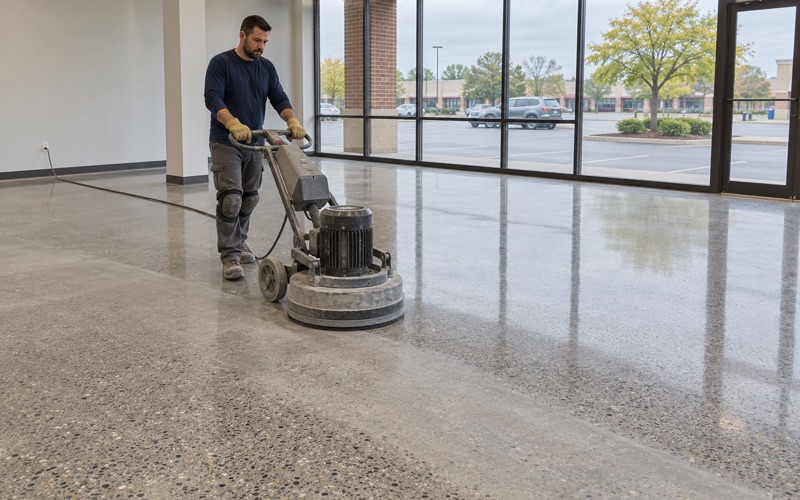
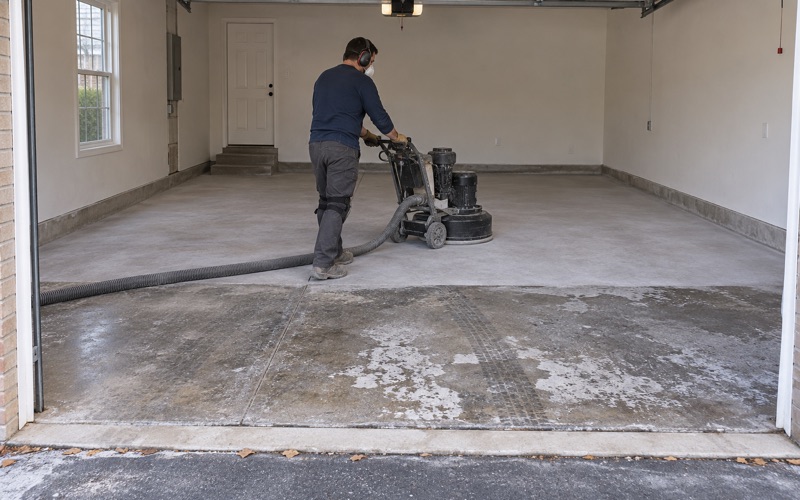
No sealer bonds to a slab that is still closed off by trowel burnish, old coating or years of solvent residue. We open the surface with a diamond grinder or a shot blaster to a measurable profile, never with an acid etch, and we vacuum the dust at the machine instead of washing it toward a floor drain. On a drycleaning floor, that drain matters more than usual.
Joints, Cracks, Drains and Dike Walls
A coated field with an open joint through the middle of it is not a sealed floor. Florida’s program lists floor surfaces, floor drains, floor joints and inner dike walls together as parts of one containment area that must be made impervious. We treat the diked area the same way, as a single surface with no gaps, because solvent will find the one detail that was skipped.
Mapping Cracks Before Anything Is Quoted
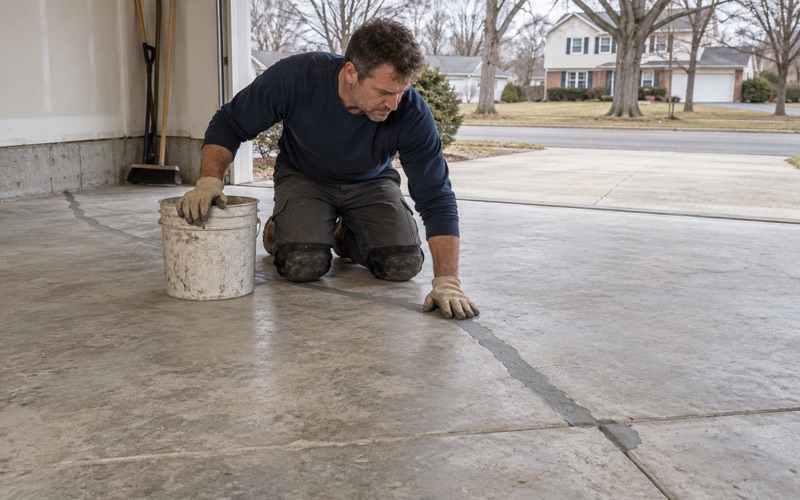
We map every crack, spall and patch inside the dike first and mark which ones are dormant shrinkage and which are still moving. Dormant cracks are routed and filled with a material compatible with the coating system. A crack that keeps opening will reflect through any rigid film, and we say so in writing when the slab needs repair before it should be coated at all.
Control joints get the same scrutiny. Inside a containment area a joint is a straight channel into the slab, so it is cleaned out, filled with a sealant chosen for the same solvent as the coating, and carried under the film rather than left as an open line. Where the slab truly moves at a joint, we discuss a flexible detail with the owner instead of pretending a hard fill will hold.
Floor Drains Inside the Dike
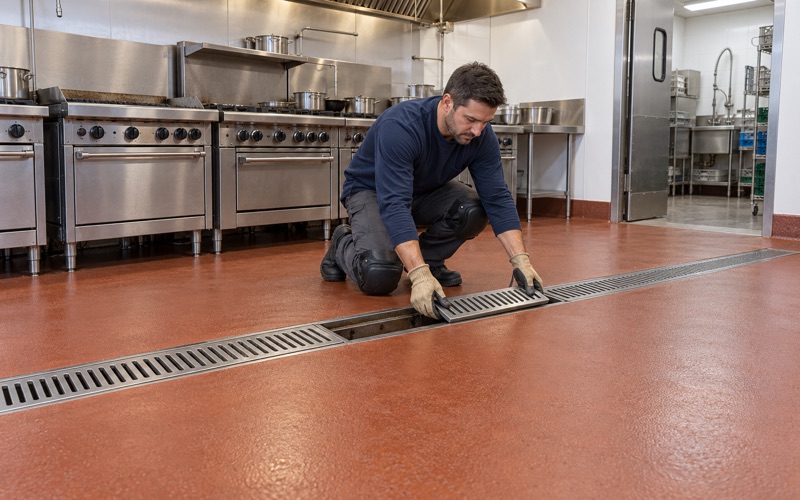
A floor drain inside a diked area is the shortest path from a spill to the sewer. Florida’s guidance names floor drains among the surfaces to seal; whether a given drain should be capped, plugged or sealed in place is the plant’s decision with its environmental adviser, not ours. Our part is to keep the floor around it from becoming the weak point and to name the drain on the proposal so nobody overlooks it.
Up the Inside of the Dike Wall
A spill that fills the dike rests against its walls as much as the floor. If the coating stops at the base of the wall, the corner where floor meets curb becomes the leak path. We run the system continuously up the inner face of the dike wall and across that corner, so the floor and the wall read as one sealed basin.
Florida also asks facilities to keep sealant specifications and application dates on site. We hand over the product names, coat count, finished thickness and application dates when we finish, because an inspector may ask and a plant owner should not have to reconstruct them. Maintenance matters too: a sealed floor scarred by dragged equipment needs touch-up before the next spill finds the scar.
Solvents in a Westchester Garage or Basement Workshop
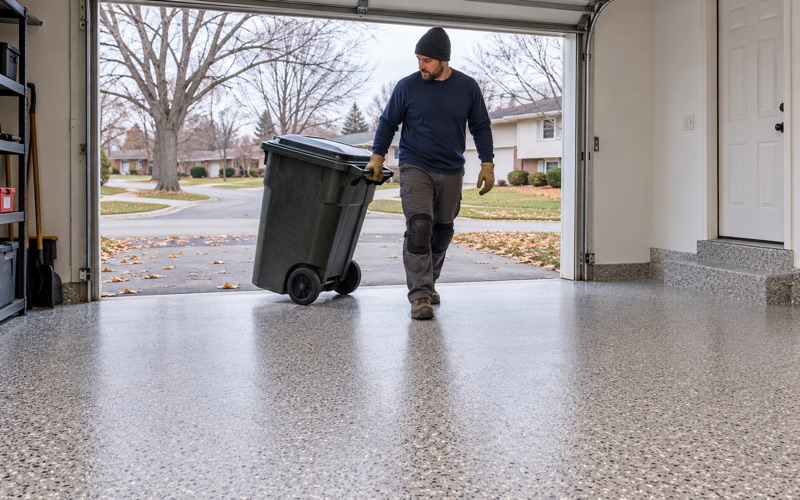
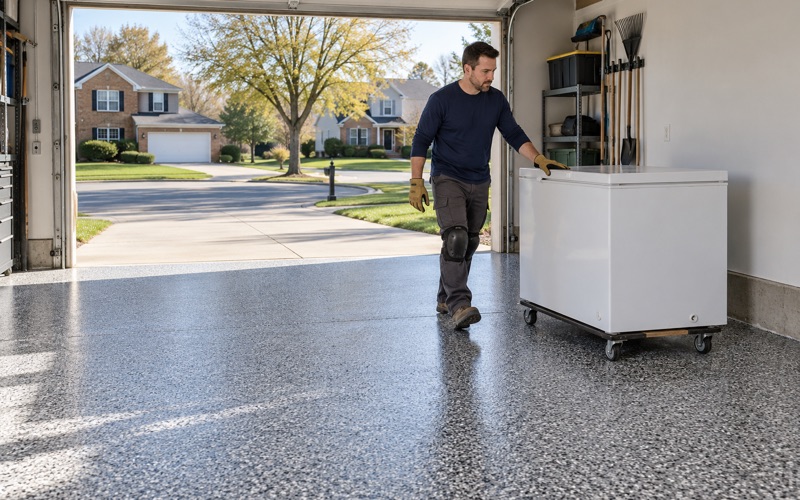
Most Westchester floors are not commercial at all. About nine in ten occupied homes here are owner-occupied, and nearly half the housing was built in the 1950s, so a typical job is a slab about seventy years old under a family that lives with it. Many of those garages hold a small solvent problem of their own: paint strippers, degreasers and parts cleaners on a shelf above bare concrete.
Storing Strippers and Degreasers on a Coated Floor
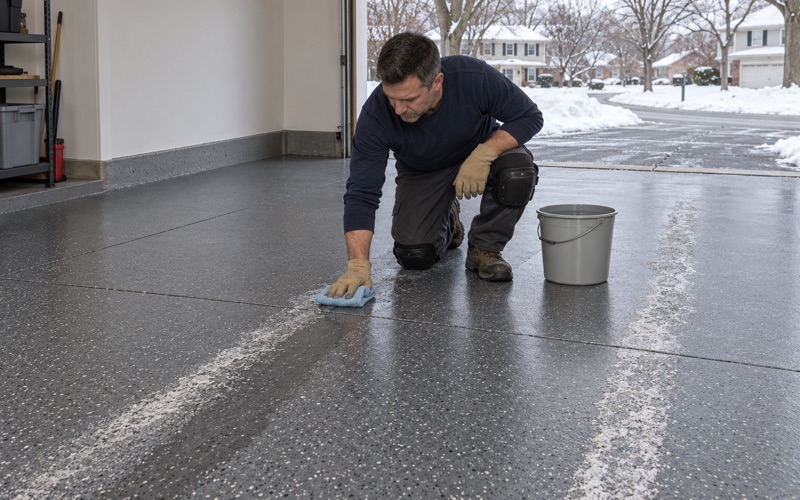
A dropped can of solvent-based stripper is the home version of a drycleaning spill. On bare concrete it soaks in and leaves a stain that grinding barely reaches. On a coated garage floor it sits on the surface long enough to be wiped up, provided the system was chosen with that chemical in mind and the spill is cleaned promptly.
Some strippers are made to dissolve exactly the kind of resin a floor is built from. If a workbench corner is where you strip furniture or clean engine parts, tell us at the estimate, and we will look at a polyaspartic or 100% solids epoxy system with resistance data for those products, or suggest a tray or mat for that spot.
Seventy-Year-Old Slabs and Moisture
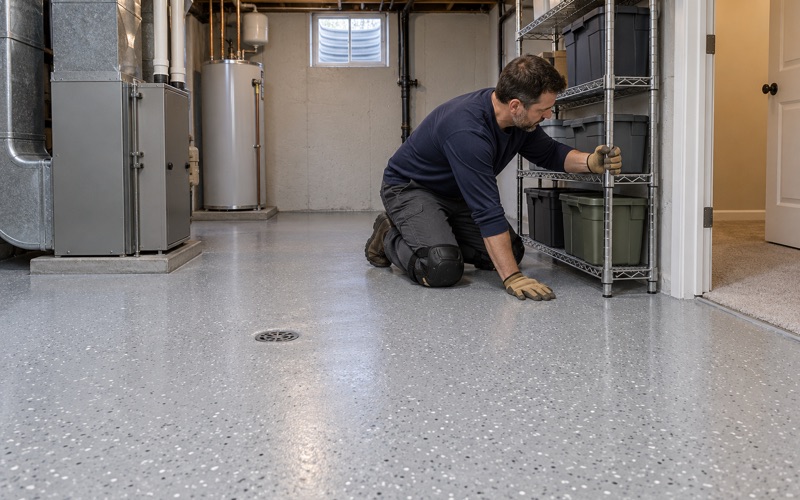
An older garage or basement slab may have no vapor retarder under it, and that changes how a coating behaves. Moisture testing is written into our scope before the price is final, using a calcium chloride test under ASTM F1869 or in-situ relative humidity probes under ASTM F2170, and a slab that reads wet gets a moisture-mitigation primer or an honest recommendation to wait.
Moisture is also the first thing we name when we explain what a coating warranty excludes. A coating will not stop seepage through a cracked basement floor, and it is never a radon fix, since radon mitigation in Illinois is separate regulated work. We would rather lose a sale than coat a slab that will push the film off from below.
Scheduling Around a Working Shop
A drycleaning plant or any small shop rarely closes for a week. We phase commercial floors around operating hours and use overnight and weekend windows where a space cannot shut, and we let slab temperature and dew point set the cure schedule rather than the calendar. Products are chosen inside the Illinois VOC limits for floor coatings, which matters in an occupied building.
- 20+ Years in Business
- Moisture Test in Every Scope
- Diamond-Ground, Never Acid-Etched